Air Conditioner • June 2, 2026
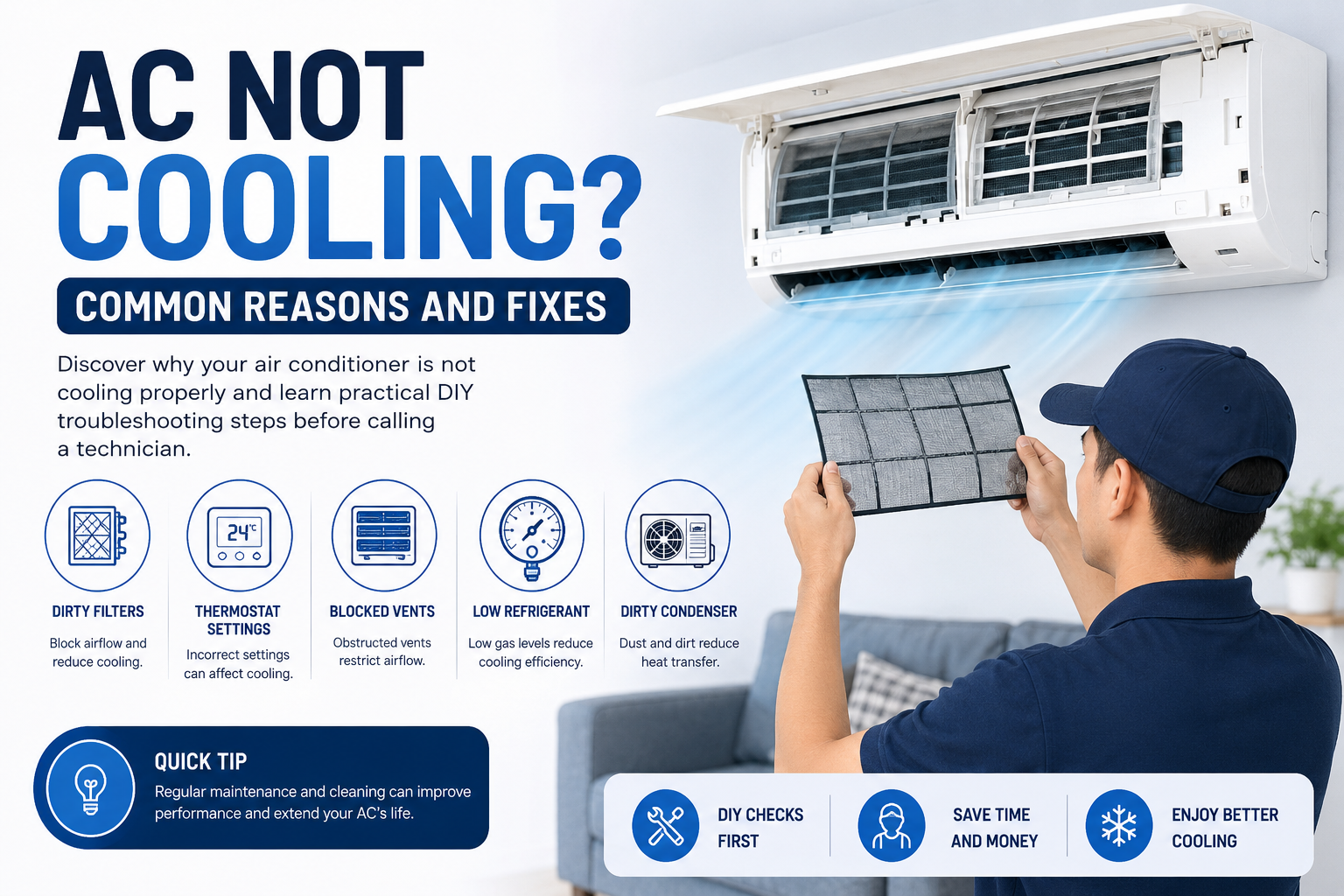
AC Not Cooling? Common Reasons and Fixes
Discover why your air conditioner is not cooling properly and learn practical DIY troubleshooting steps before calling a technician.
AC Not Cooling? Common Reasons and Fixes
Air conditioners have become an essential part of modern homes, especially during the hot summer months. When your AC suddenly stops cooling properly, it can make your home uncomfortable and lead to frustration.
Fortunately, many cooling issues can be identified and sometimes resolved without professional assistance.
How an Air Conditioner Cools Your Home
Your AC removes heat from indoor air and transfers it outside using refrigerant. The system relies on several components working together:
- Air filters
- Evaporator coils
- Condenser coils
- Compressor
- Refrigerant
- Thermostat
If any of these components are dirty, damaged, or malfunctioning, cooling performance can decrease significantly.
1. Dirty Air Filters
A dirty air filter is one of the most common reasons for poor cooling.
Air filters collect dust, pollen, pet hair, and other airborne particles. Over time, these particles build up and restrict airflow.
Common Symptoms
- Weak airflow from vents
- Rooms taking longer to cool
- Increased electricity bills
- Dust accumulation around vents
DIY Solution
- Turn off the AC.
- Open the indoor unit panel.
- Remove the air filters.
- Wash reusable filters with water.
- Allow them to dry completely.
- Reinstall and restart the AC.
Maintenance Tip
Clean filters every 2–4 weeks during heavy usage periods.
2. Incorrect Thermostat Settings
Sometimes the issue is as simple as incorrect thermostat settings.
Check the Following
- Is the AC set to Cool mode?
- Is the temperature lower than room temperature?
- Are the thermostat batteries working?
- Is the fan speed set correctly?
Recommended Settings
- Mode: Cool
- Temperature: 22°C–24°C
- Fan Speed: Auto
Proper thermostat settings improve comfort and energy efficiency.
3. Blocked Air Vents
Furniture, curtains, and other objects can block airflow.
Signs
- Uneven room temperatures
- Weak airflow
- Some rooms remain warm
Solution
- Check all air vents.
- Remove obstructions.
- Clean vent covers.
- Maintain adequate clearance around vents.
4. Low Refrigerant Gas
Refrigerant absorbs heat and cools your room.
Low refrigerant levels usually indicate a leak.
Symptoms
- Warm air from vents
- Ice formation on coils
- Hissing sounds
- Continuous AC operation
Solution
Contact a qualified technician to:
- Locate leaks
- Repair damaged lines
- Recharge refrigerant
Refrigerant repairs should never be attempted without proper equipment.
5. Dirty Outdoor Condenser Unit
The outdoor unit releases heat from your home.
When dust, leaves, and debris accumulate, cooling efficiency decreases.
Symptoms
- Poor cooling
- Higher power consumption
- Longer running cycles
Solution
- Switch off power.
- Remove leaves and debris.
- Clean visible dirt.
- Maintain at least 2 feet of clearance.
6. Frozen Evaporator Coil
Restricted airflow or refrigerant issues can cause the evaporator coil to freeze.
Symptoms
- Ice on the indoor unit
- Water leakage
- Weak airflow
Solution
- Turn off the AC.
- Allow ice to melt.
- Clean filters.
- Inspect vents.
If freezing continues, contact a technician.
7. Electrical Problems
Electrical issues can affect cooling performance.
Possible Causes
- Faulty capacitor
- Loose wiring
- Damaged contactor
- Circuit board issues
Warning Signs
- AC not starting
- Frequent breaker trips
- Burning smell
Solution
Professional diagnosis is recommended.
8. Compressor Failure
The compressor is the heart of the air conditioning system.
If it fails, your AC may run without cooling.
Symptoms
- Loud noises
- Warm airflow
- Outdoor unit not operating correctly
Solution
Compressor issues require professional repair.
When to Call an Expert
Seek professional assistance if:
- Refrigerant is leaking
- Electrical components fail
- Compressor problems are suspected
- Ice repeatedly forms on coils
- Cooling remains poor after troubleshooting
Preventive Maintenance Tips
To keep your AC running efficiently:
- Clean filters regularly
- Service the unit annually
- Keep outdoor units clean
- Monitor unusual noises
- Check thermostat settings frequently
Regular maintenance extends the life of your air conditioner and improves cooling performance.
Final Thoughts
An air conditioner that isn't cooling properly doesn't always require expensive repairs. Many problems can be solved through basic maintenance and troubleshooting.
However, issues involving refrigerant, electrical systems, or compressors should always be handled by qualified professionals.
By understanding these common causes and following preventive maintenance practices, you can keep your AC operating efficiently throughout the year.